

IBM announced on August 19, 2026, at Yorktown Heights, N.Y., that it had joined and cooled down two cryogenic modules into a single environment. The new architecture is designed to scale into the modular, shared, ultra-cold system that links hundreds of quantum chips into one larger quantum computer. IBM calls it a milestone on the path to IBM Quantum Starling in 2029, which IBM expects to be the world's first fault-tolerant quantum computer.
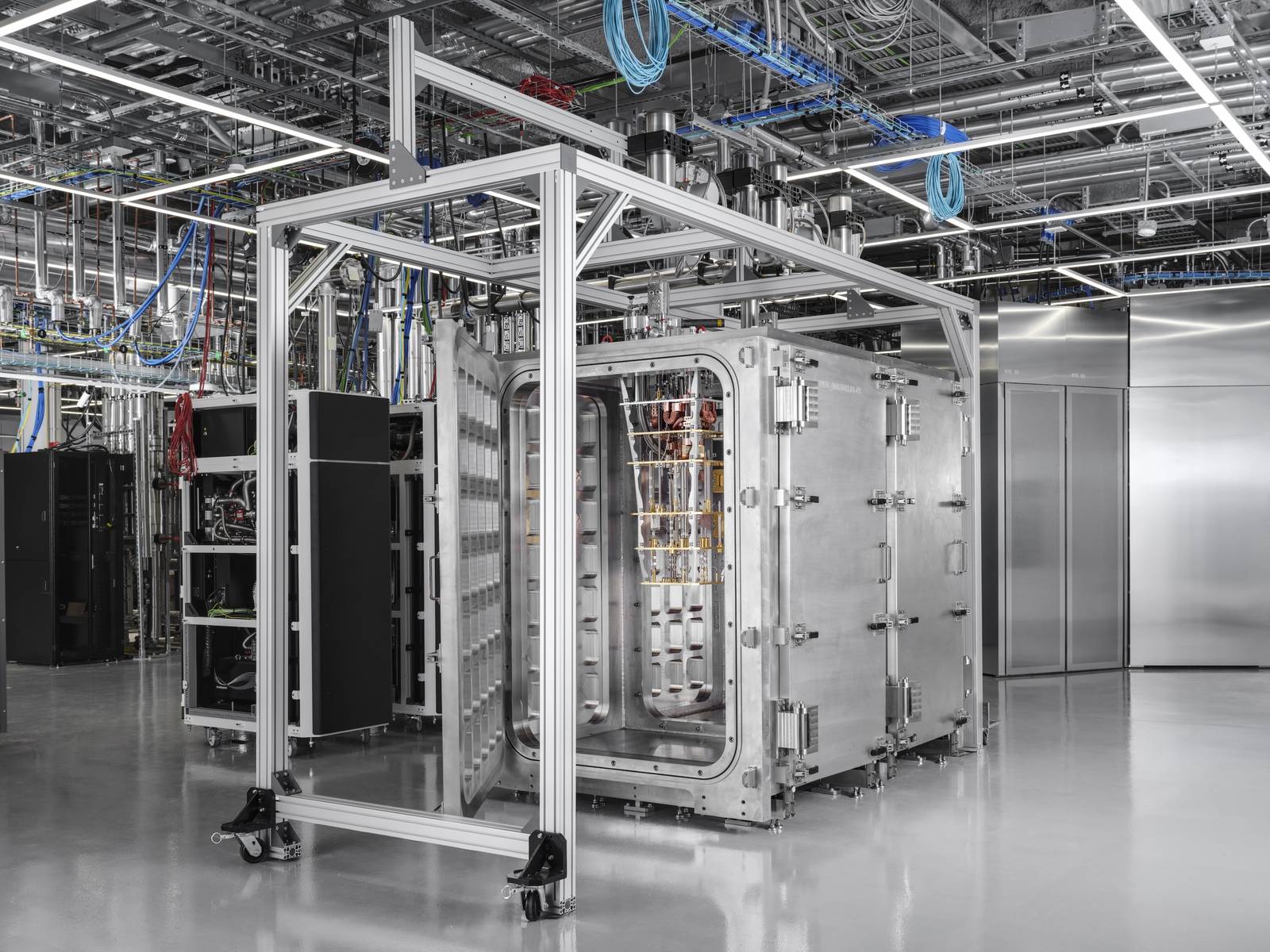
What IBM announced
- The first two operational modules together stand more than 8 feet tall and 8 feet wide. In initial tests they cooled jointly to 4 kelvin, the temperature of liquid helium, in under 5 days, and reached below 15 millikelvin shortly after. IBM puts that at more than 180 times colder than deep space.
- Each module's vacuum enclosure offers up to 12 times more wiring space than IBM's most widely used quantum systems. That space is for chip-to-chip connections, both inside a module and between modules.
- The box-shaped modules connect in a tight row, and IBM's L-couplers link separate quantum processors so they share information and operate as one computer.
- By 2027, IBM's roadmap plans to use L-couplers to link multiple processors into a quantum computer with at least 1,000 programmable qubits. IBM will install Nighthawk processors into the modules later this year for performance testing. By the time Starling is delivered, IBM plans for each module to house thousands of qubits.
- Three essential parts of the IBM Quantum System Two environment are built into the new architecture in a way that lets each be tested, improved and iterated independently.
IBM introduced its plan for Starling last year with an error-correction code that sharply reduces the physical resources fault tolerance needs. IBM says its progress has stayed on course since, including demonstrations of core hardware components and advances in efficient error-correction decoding.
What it means for the work we deliver
VENETA delivers IBM Quantum to the enterprise through the IBM Quantum GSI (Global Systems Integrator) partnership held by VENETA Korea Inc., and our quantum path follows IBM's roadmap. Three things follow from this announcement.
- Larger instances, whole. Today we solve an operations problem that is bigger than one processor as neighborhoods that fit the hardware, with a classical loop around them. A machine with at least 1,000 programmable qubits in 2027 is the step toward solving such instances in one piece. The depth budget we attach to every instance tells you when that becomes real for your problem.
- Labels do not change. Every result we deliver keeps its backend, qubits, shots, circuit depth and gap to the classical optimum. A new machine changes the numbers on the label, not the discipline.
- Fault tolerance has a date. Starling in 2029 is when the parts of a question we keep on the simulator today can move to hardware. Until then, the simulator answers them, and we say so on every result.
The full announcement is on the IBM Newsroom. Our delivery is described on IBM Quantum delivery.